
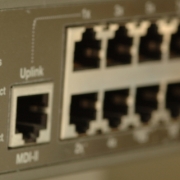
Ethernet vs. Carrier Ethernet
Technology is in constant development and evolution. That is why today, we will focus on explaining the main differences between Ethernet and Carrier Ethernet.
The world is constantly connected through communication. According to the Mexican INEGI (National Institute of Statistics and Geography), 70.1% of the Mexican population six years and older are Internet users. That wouldn’t be possible without C technology.
Ethernet is the preferred network technology. Its ubiquity and popularity have taken it a step beyond the LAN network. Similarly, in almost every other aspect of the network infrastructure.
Similarities and Differences Between Ethernet and Carrier Ethernet
Let’s start by explaining what Carrier Ethernet is. It is an Ethernet technological application that allows network providers to offer Ethernet services to their customers. It provides Internet access and communication between local area networks (LANs) of businesses and academic, private, and government organizations.
Its services and standards have been defined by the Metro Ethernet Forum (MEF). The MEF has also developed certification programs and fostered the global adoption of Carrier Ethernet. Its main characteristics, which differentiate it from Ethernet, are:
- A Carrier Ethernet serves many organizations, while a LAN Ethernet serves a single organization.
- A Carrier Ethernet covers a wide area; therefore, it expands outside a single building. On the other hand, an Ethernet serving a LAN is usually inside a building.
- To connect to a Carrier Ethernet, the entire organization connects to a particular operator’s Ethernet port, whereas in an Ethernet LAN, each user connects to a dedicated Ethernet port.
Characteristics
- Standardized services: Provides standardized and ubiquitous services. Such services are Ethernet virtual private line, Ethernet virtual private LAN, and Ethernet virtual private tree.
- Reliability: Carrier Ethernet must detect failures and recover from them without affecting users. Reliability is achieved through Service Operation, Administration, and Maintenance (SOAM).
- Scalability: Services must be scalable; iConverter NIDs provide scalable bandwidth from 1 Mbps to 1 Gbps.
- Quality of Service (QoS): Carrier Ethernet must provide QoS in its services. Performance is kept through SLA (Service Level Agreements) for voice, video, and data.
Carrier Ethernet Is the Absolute Winner!
Factors that drive the adoption of Carrier Ethernet include the need to reduce carrier networks’ costs. This can be achieved by deploying convergent networks. That is why they combine business, residential, and wireless traffic to create economies of scale. Any company or network operator can achieve significant savings. This is possible through the convergence of carrier networks and corporate networks.
Contact us if you wish to learn more about this topic. At NGIN Services, we offer services for the telecom industry with state-of-the-art solutions. Contact us!